


The Knee Clicking You've Learned to Ignore

What medial plica syndrome is, why dancers are prone to it, and what actually helps
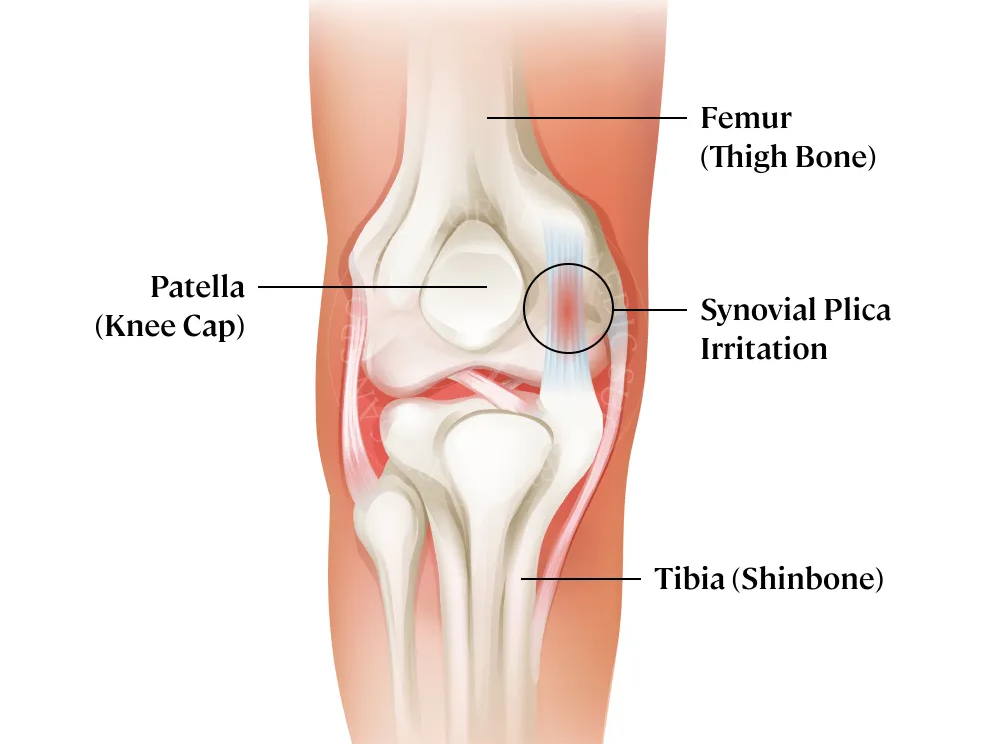
If you've ever felt a little catch, snap, or pinch on the inside of your knee during a deep plié or a fondu, and then shrugged it off because it didn't really hurt, you're not alone. Most dancers have felt some version of this at some point in their training, and most dancers ignore it, because it doesn't announce itself the way a sprained ankle does. It just clicks, catches, or aches faintly, and then class moves on. That quiet, easy-to-dismiss sensation is often the first sign of medial plica syndrome, a knee condition that is common in dancers but rarely talked about because it doesn't look dramatic and it doesn't show up on an x-ray.
The plica itself is not something gone wrong. It's a normal fold of the synovial lining inside your knee, left over from how the joint formed before you were born. Roughly half of all people have one, and for most of them it never causes a single problem. The medial plica, which runs along the inner side of the kneecap and attaches near the lower femur (thigh bone), is the one most likely to become symptomatic, because of where it sits. When the knee bends and straightens over and over, that little band of tissue can get pinched between the kneecap and the femur. Do that enough times, and the plica can thicken, tighten, and become irritated at which point a completely normal structure starts to behave like an inflamed one, catching and rubbing with every rep instead of gliding quietly out of the way.
This is exactly the kind of repetitive motion dancers specialize in. Grand pliés, fondus, jumps and their landings, floor work that has you rising and lowering through deep knee flexion, and the quick directional changes of chaînés and pivots all load the front of the knee again and again, class after class, day after day. Add in the extra rotational demand that turnout places on the hip and knee, and the way many dancers compensate for limited hip turnout by twisting through the knee instead, and you have a joint that's being asked to flex, extend, and rotate under load far more than the average knee ever will. None of that is inherently harmful because dancers' knees are remarkably resilient, but it does explain why a normally silent fold of tissue can start to make itself known in a dancer's body specifically.
The trouble is that the early signs are easy to miss, both for dancers and for the teachers and coaches watching them. A little clicking or popping during plié is often written off as "just a knee thing," especially if it isn't painful yet. A dull, achy sensation on the inner kneecap after a long rehearsal can get filed under general soreness. Pain going up and down stairs, or a sense of the knee wanting to catch when rising from a low position, might be blamed on generic overuse rather than investigated further. And because symptoms in plica syndrome often start subtly and build gradually (sometimes staying quiet for weeks before flaring) there usually isn't one dramatic moment that makes anyone stop and pay attention. By the time it's painful enough to mention out loud, it's often been developing for a while.
The good news is that medial plica syndrome responds well to the right conservative care, and surgery is rarely the first or even the necessary step. Research following dancers and other athletes with this condition has found that the large majority get back to pain-free function with several months of targeted physical therapy, no scalpel required. That treatment usually centers on rebuilding strength through the quadriceps, particularly the muscle fibers just above the inner kneecap that help control how the kneecap tracks, along with the hips and hamstrings that share the job of controlling knee alignment during landings and pliés. Manual therapy to encourage better gliding of the tissue, a temporary reduction in the deepest, most repetitive knee-flexion work, and icing after class can all help calm things down while that strength comes back online. What tends not to help is powering through the discomfort and hoping it resolves on its own - that approach is far more likely to turn a manageable irritation into a longer layoff.
If a knee has started clicking, catching, or aching in a way that's new, or if it's been happening for a while and you've just gotten used to it, that's worth having looked at properly rather than diagnosed by scrolling. A physical therapist who understands dancers' knees can tell the difference between a plica that needs calming down, a tracking issue further up the chain, or something else entirely, and can build you a plan that gets you back to full-out grand allegro instead of just "good enough."
This post is educational and general in nature, not a diagnosis. If you're dealing with knee pain, clicking, or catching, please have it evaluated by a qualified healthcare provider before self-treating.
If any of this sounds familiar, you don't have to just keep dancing around it (pun intended). I work with dancers at every level to figure out what's actually driving knee pain and build a plan that gets you back to full training with confidence - Click Here to Book.
And if you want a head start on smart, dancer-specific injury prevention between now and your next appointment, check out my 12-week follow along program The Next Level Dancer Blueprint.


Comments